


Pamukkale Daily Tour by Bus
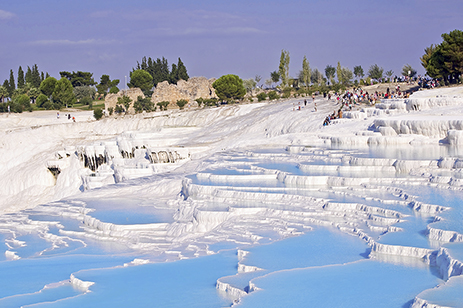

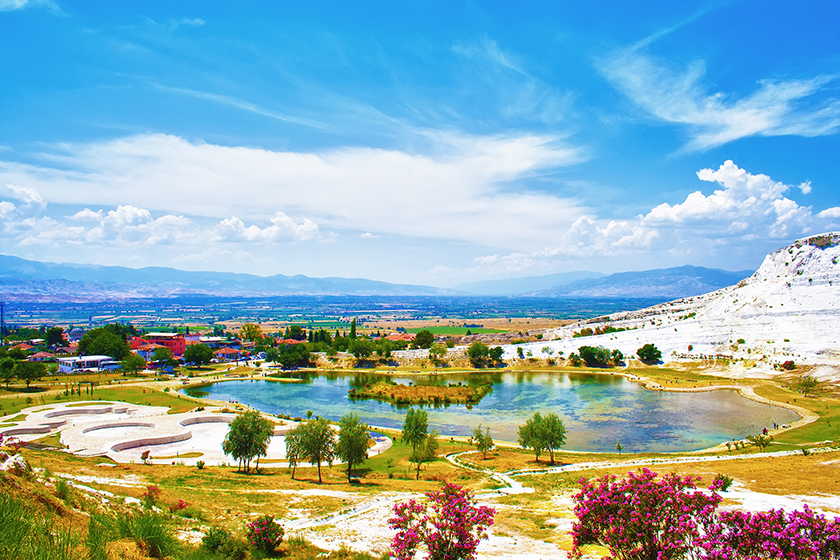
Explore the breathtaking beauty of Pamukkale, one of the most remarkable natural wonders in Turkey and a UNESCO World Heritage Site, known as the Cotton Castle. Pamukkale is famous for its dazzling white terraces formed by mineral-rich thermal waters that have flowed down the hillside for thousands of years.
Natural Thermal Pools with Health Benefits
Pamukkale’s terraces are created by 17 natural hot springs rich in calcium and other minerals. As the warm water reaches the surface, carbon dioxide evaporates and calcium deposits form the stunning white travertine pools.
These thermal waters have been valued since ancient times for their potential health benefits. Bathing in the warm mineral waters may help relax muscles, support circulation, and soothe joint and skin conditions. Visitors can also enjoy the unique experience of walking barefoot through the warm pools while admiring the extraordinary landscape.
Explore the Ancient City of Hierapolis
Above the terraces lies the ancient Greco-Roman city of Hierapolis, founded in the 2nd century BC by the kings of Pergamon and later developed as an important Roman spa city. Hierapolis became famous for its healing thermal baths, sacred temples, and vibrant trade. Today you can explore impressive ruins including the Necropolis, Roman Baths, Frontinus Street, Agora, Byzantine Gate, and the magnificent Roman Theater. The city reflects a fascinating blend of pagan traditions and early Christian history.
The Famous Cleopatra Pool
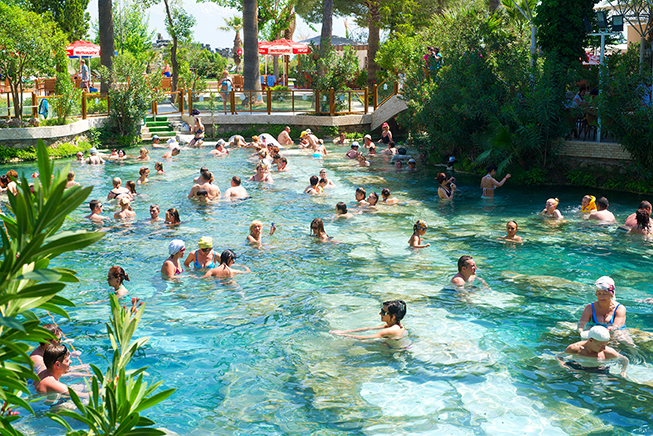
One of the highlights of the site is the legendary Cleopatra Pool, also known as the Ancient Pool. This thermal bath contains submerged Roman columns and warm mineral water where visitors can swim just as people did in ancient times.
Red Springs of Karahayit
A short drive from Pamukkale is Karahayit, famous for its striking red thermal springs. The mineral-rich waters here create colorful terraces in shades of red, green, and brown, offering another unique natural spectacle in the region.
Tours highlights!
Visit Karahayit Red Springs and discover the unique mineral waters and colorful formations of the Red Spring area.
Explore Hierapolis Ancient City with a guided visit to Necropolis, Roman Baths, Domitian Gate, Latrines,
Frontinus Street, Agora, Byzantine Gate, Triton Fountain, Cathedral, Temple of Apollo, Plutonium, Ancient Theater, Antique Pool
Pamukkale Travertines: Photo stops at the most beautiful viewpoints of the terraces.
Free Time (45 minutes)
You will have time to relax, explore the terraces or swim in the Ancient Pool. You can walk barefoot through the travertine terraces from top to bottom, experiencing the warm mineral waters firsthand.
Lunch at a local restaurant.
Drop off back to bus station in Denizli.
You have to go by yourself to the bus station in Istanbul.
What's Included
- Pick up and drop off at Pamukkale bus station
- Visit of Karahayit Red Springs
- Explore Hierapolis Ancient City
- Travertines
- Professional guide
- Photo stops
- Free time (45 minutes) to relax, explore or swim in ancient pool
- Lunch at a local restaurant
Not Included
- Personal expenses
- Drinks and refreshments
- Professional photography or video services
- Tips/gratuities
- Cleopatra pool (You can pay at the entrance)
- Comfortable clothing and towel
- Sunglasses & sunscreen for sun protection
- A camera or a smartphone for amazing photos
- Personal items you may need during the tour
Bring your sense of adventure and get ready for an unforgettable day to treasure for a lifetime!!
Frequently Asked Questions
Pamukkale, known as the “Cotton Castle,” features dazzling white travertine terraces formed by mineral-rich thermal waters and is a UNESCO World Heritage Site.
Yes, visitors can walk barefoot on the terraces and swim in the Cleopatra (Ancient) Pool, a historic thermal bath with submerged Roman columns.
The tour includes a guided visit to Hierapolis Ancient City, exploring the Necropolis, Roman Baths, Roman Theater, Frontinus Street, Byzantine Gate, Temple of Apollo, and more.
Yes, the Red Springs of Karahayit offer colorful mineral terraces in red, green, and brown shades, just a short drive from Pamukkale.
Yes, the tour includes lunch at a local restaurant.
You will have approximately 45 minutes of free time to relax, explore the terraces, or enjoy the thermal waters.
This tour combines nature, history, and healing waters in one unforgettable day, offering a unique Pamukkale experience.
Most Pamukkale daily bus tours usually include hotel pickup and drop-off where available, round-trip travel by comfortable coach, a professional guide, free time in Pamukkale, and visits to Hierapolis. Some tours also provide lunch and entrance fees, while others charge these separately. Always review the tour inclusions before booking.
The total duration depends on your departure city. Local tours from Denizli usually last 6–8 hours, while day tours from coastal resorts such as Kusadasi, Marmaris, Fethiye, or Antalya may take 10–15 hours because of the travel time.
Pamukkale is famous for its bright white travertine steps formed by mineral rich thermal springs. It also contains the old Roman city of Hierapolis making it one of Turkey's most visited UNESCO World Heritage Sites.
Yes. Visitors can walk barefoot on designated sections of the travertines to help preserve the delicate calcium formations.
Yes. You may swim in Cleopatra's Antique Pool (optional entrance fee) famous for its warm thermal waters and submerged Roman columns. Swimming is not permitted in most of the travertine pools to protect the natural formations.
Common highlights include:
- Pamukkale’s white travertine terraces
- The ancient city of Hierapolis
- The Roman theater
- The Necropolis
- Old Roman bath ruins
- Cleopatra Antique Pool, optional
A guided bus tour offers a convenient, budget-friendly, and easy way to explore Pamukkale. Travel, planning, and sightseeing are handled for you, so you can simply enjoy one of Turkeys most famous natural and historical places. Visiting on your own is possible, but tours make the trip simpler, especially from far away cities.
Our partners