


Kamondo Stairs in Istanbul: History, Location and the Story Behind This Landmark
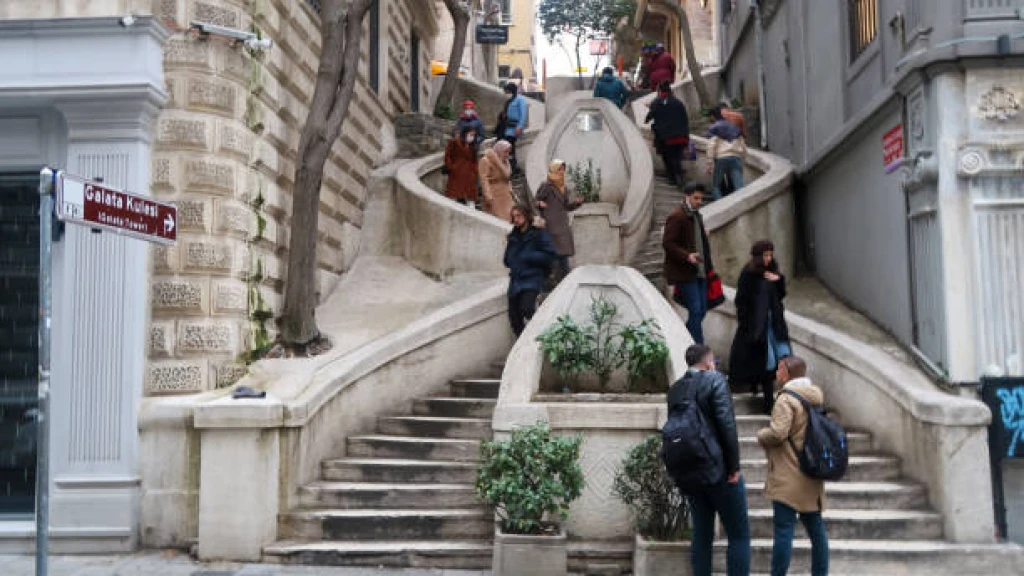
Kamondo Stairs in Istanbul
There are famous places in Istanbul that almost every visitor knows but some of the city's most memorable discoveries are much smaller.
One of them is the Kamondo Stairs, an elegant, winding staircase hidden between Karakoy and Galata. With its unusual curves, historic surroundings and fascinating story, the stairs offer a perfect example of why exploring Istanbul on foot can reveal a completely different side of the city.
If you are planning a trip to Istanbul, add the Kamondo Stairs to your walking route through Karakoy, Galata and Beyoglu.
Where Are the Kamondo Stairs?
The Kamondo Stairs are located on Bankalar Caddesi (Banks Street) in the historic Galata area of Istanbul, connecting the lower part of Karakoy with the streets leading towards Galata.
Their location makes them particularly easy to combine with other Istanbul attractions. After visiting the stairs, you can continue towards Galata Tower, explore the narrow streets of Galata, stop for Turkish coffee, or walk downhill towards the Bosphorus and Karakoy.
Bankalar Caddesi itself is worth exploring. During the late Ottoman period, it was an important financial center, and many impressive historic buildings still line the street.
The Story Behind the Kamondo Stairs
The stairs were built in the 19th century by the prominent Kamondo family, a wealthy Jewish banking family associated with Istanbul's Galata district.
The exact construction date is sometimes given differently in historical sources, but the stairs are generally dated to around 1870–1880. They connected the family's residential area with Bankalar Caddesi, where their business interests were located.
The staircase was therefore not originally designed as a tourist attraction. It was part of everyday life in old Istanbul, helping people navigate the steep streets of Galata.
That is part of what makes the Kamondo Stairs so interesting today. You are not simply looking at an old monument. You are standing in a place that was once part of the daily rhythm of Ottoman Istanbul.
Why Are the Kamondo Stairs So Special?
The first thing visitors notice is their shape.
Instead of being a simple straight staircase, the steps curve and form an elegant geometric pattern. Their architectural character combines Baroque and early Art Nouveau influences, creating a design that looks surprisingly sophisticated for what was essentially a practical urban passage.
The staircase has also become a favorite location for photographers. Its curves create interesting perspectives from both the top and the bottom, while the surrounding historic buildings provide a beautiful Istanbul backdrop.
The famous French photographer Henri Cartier-Bresson photographed the stairs in the 1960's, helping to make this small corner of Istanbul known far beyond the city.
A Perfect Stop During a Galata Walking Tour
One of the best ways to experience the Kamondo Stairs is not to visit them separately, but to include them in a longer walk.
A possible route could begin in Karakoy, continue along Bankalar Caddesi, stop at the Kamondo Stairs, and then climb towards Galata.
From there, continue through the atmospheric streets surrounding Galata Tower, where old apartment buildings, cafes, boutique shops and small galleries create a completely different atmosphere from Istanbul's monumental historic peninsula.
You can then continue towards İstiklal Avenue and Beyoglu, or return downhill towards Karakoy.
This is one of the reasons Istanbul is such a rewarding city for walking: a single route can take you through several centuries of history within a relatively short distance.
Don't Stop at the Kamondo Stairs but Discover More Beautiful Steps
The Kamondo Stairs are not the only staircase worth seeing in Istanbul.
Because much of the city is built across hills, stairs have always played an important role in connecting neighborhoods. Some are historic architectural landmarks, while others have become popular photography spots.
The Colourful Stairs of Balat
In the colorful neighbohoods of Fener and Balat, you can find another very different type of Istanbul staircase.
Colorful Stairs in Balat have become a popular stop for visitors exploring the area's colorful streets. Unlike the Kamondo Stairs, their main attraction is their bright appearance and photogenic surroundings rather than major historical architecture.
The area around Balat is particularly enjoyable on foot. Colorful façades, old houses, cafes, churches and neighborhood streets create a relaxed atmosphere that feels very different from the major tourist sights.
The Rainbow Stairs Around Findikli
Another well-known example is the rainbow-painted staircase associated with the Findikli–Cihangir area.
The colorful steps became widely known after local resident Huseyin Çetinel painted a staircase in 2013. The project later became a popular Istanbul visual landmark and inspired similar colorful staircases elsewhere.
These places show another side of Istanbul: a city where ordinary streets, stairs and neighborhood corners can become part of the visitor experience.
Why Walking Is One of the Best Ways to Discover Istanbul
Istanbul is often introduced through its grand monuments, and rightly so. But the city's personality becomes even clearer when you leave the main tourist routes.
Walk through Galata and you encounter former banking buildings, old passages and unexpected architectural details.
Walk through Balat and Fener and you discover colorful houses, steep streets and neighborhood life along the Golden Horn.
Walk through Karakoy and you move between historic buildings, cafes, galleries and the waterfront.
Every neighborhood has its own character.
And sometimes the place you remember most from your Istanbul holiday is not the largest monument. It may be a staircase, a tiny cafe, an old doorway or a street where you stopped because the view suddenly caught your attention.
Kamondo Stairs and Galata: A Great Combination for First-Time Visitors
If this is your first visit to Istanbul, the Kamondo Stairs are particularly easy to combine with some of the city's best-known attractions.
Consider exploring:
- Karakoy
- Bankalar Caddesi
- Kamondo Stairs
- Galata Tower
- Galata's historic streets
- İstiklal Avenue
- Beyoglu
- Fener and Balat
The famous Galata Tower is especially close to the Kamondo Stairs, making the two attractions a natural combination during a walking day.
You can also extend your walk towards the Golden Horn or return to the waterfront for a ferry ride.
The Best Time to Visit the Kamondo Stairs
The Kamondo Stairs are an outdoor public staircase, so there is no ticket or traditional entrance procedure. They can be incorporated into your Istanbul sightseeing route at any time.
For photography, early morning or later in the day can be more comfortable, particularly if you prefer a quieter atmosphere.
Remember that this is still a functioning urban staircase. Visitors should be respectful of pedestrians using the steps to move through the neighborhood.
Add the Kamondo Stairs to Your Istanbul Adventure
The Kamondo Stairs may take only a few minutes to see, but they represent something much bigger: the layered history of Istanbul.
They connect Karakoy and Galata physically, but they also connect different chapters of the city's history — Ottoman commerce, European architectural influences, the story of the Kamondo family and the modern Istanbul that visitors explore today.
So when planning your Istanbul itinerary, don't only look for the city's biggest attractions.
Leave some time to walk.
Follow the steep streets.
Look around the corners.
And perhaps stop for a photograph on a beautiful old staircase.
The Kamondo Stairs are a reminder that in Istanbul, the journey between the famous sights can be just as fascinating as the sights themselves.
Our partners