


Galata Mevlevihanesi Museum: History and Mevlevi Heritage in Istanbul
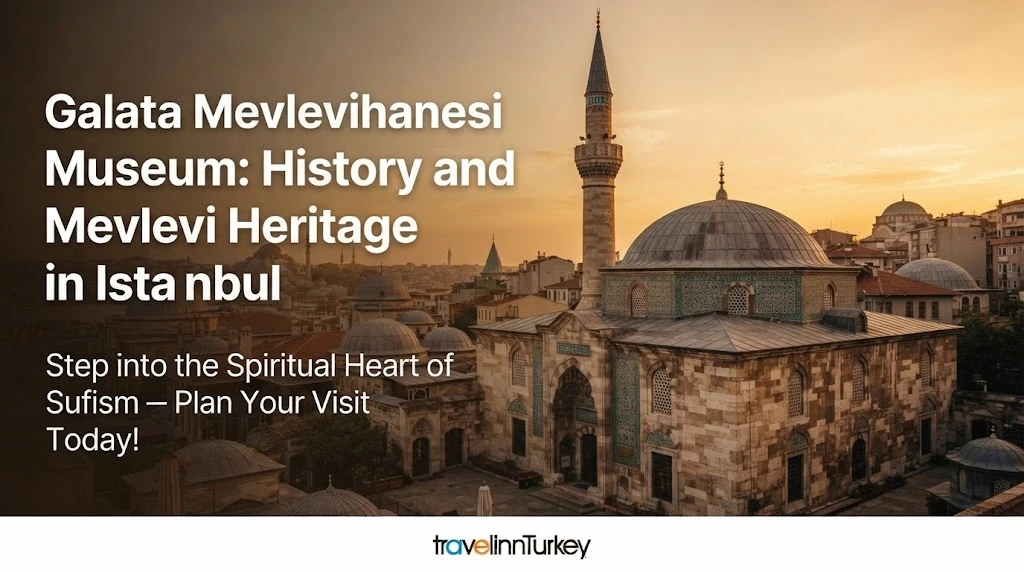
Galata Mevlevihanesi Museum
History and Mevlevi Heritage in Istanbul
Galata Mevlevihanesi Museum, located on Galip Dede Street near Tunel at the lower end of Istiklal Avenue, is one of Istanbul's most important places for discovering Mevlevi culture, Sufi traditions, Ottoman history, and the art of the whirling dervishes. For travelers exploring Beyoglu, it offers a quieter and more contemplative experience alongside the busy shops, cafes, galleries, and historic buildings of Istiklal Street.
Today, the museum preserves the heritage of the historic Galata Mevlevi Lodge, while its collections and surviving structures help visitors understand the religious, artistic, literary, and musical traditions associated with the Mevlevi order. The official museum information identifies the complex as dating back to 1491.
Where Is Galata Mevlevihanesi Museum?
The museum is at Sahkulu Mahallesi, Galip Dede Caddesi No. 15, Beyoglu, Istanbul, close to the Tunel end of Istiklal Avenue.
Galata Mevlevi Museum
Its position makes it particularly convenient to include in a walking tour of historic Beyoglu. From the museum, visitors can continue toward Galata Tower, walk up Galip Dede Street toward Istiklal Avenue, or explore the surrounding historic streets of Galata.
The museum itself notes that Galata Tower is only a short walk away and that Istiklal Avenue extends from the Galata area toward Taksim.
A Mevlevi Lodge Dating Back to 1491
The history of Galata Mevlevihanesi begins in 1491, when the lodge was established on the slopes of Galata. Over the centuries, it was known by several names, including Galata Mevlevihanesi, Kulekapisi Mevlevihanesi, and Galip Dede Tekkesi.
The building complex experienced several periods of damage and reconstruction. The 1509 earthquake, famously known as the "Little Apocalypse," probably affected the lodge. It was subsequently repaired, and it suffered further damage in the 1765 Tophane fire. Sultan Mustafa III commissioned repairs following the fire.
Its present appearance is the result of later Ottoman rebuilding and restoration. Particularly important was the period between 1851 and 1859, during the reign of Sultan Abdulmecid, when the complex acquired much of the form associated with it today.
The Connection with Seyh Galib
One of the most fascinating personalities associated with Galata Mevlevihanesi is Seyh Galib, one of the great poets of Ottoman Divan literature.
In 1791, Seyh Galib became the postnisin, or spiritual head, of the lodge. He was also known for his relationship with Sultan Selim III, who supported the renovation of the Mevlevihane during this period.
For visitors interested in Ottoman literature, the connection makes Galata Mevlevihanesi more than a religious complex. It is also a place connected with the intellectual, poetic, musical, and artistic life of late Ottoman Istanbul.
What Is Mevlevi Culture?
The Mevlevi tradition developed from the teachings and spiritual legacy of Mevlana Jalal al-Din Rumi, the 13th-century poet and mystic whose ideas emphasized love, spiritual transformation, tolerance, and the search for a deeper relationship with the divine.
The famous Sema ceremony, performed by the whirling dervishes, is perhaps the best-known expression of Mevlevi culture.
The whirling movement is not simply a performance. It forms part of a structured spiritual ritual in which music, movement, prayer, and symbolism are brought together.
For travelers who have seen modern whirling-dervish performances elsewhere in Istanbul, visiting Galata Mevlevihanesi provides an opportunity to understand the historical setting and cultural background behind this tradition.
The Semahane: The Heart of the Museum
One of the most important spaces within Galata Mevlevihanesi is the Semahane, the hall associated with the Sema ceremony.
According to the Ministry of Culture and Tourism, the museum's exhibition areas are concentrated in the Semahane building. The lower level contains displays relating to Sufism, Mevlevi objects, the history of Galata Mevlevihanesi, and fine arts. The main floor includes the Sema area, while the upper galleries contain examples of calligraphy and musical instruments.
This makes the museum particularly valuable for travelers wanting to understand how music, calligraphy, poetry, ritual, and spirituality were connected within Mevlevi culture.
Seyh Galib's Tomb
Another important part of the complex is the tomb of Seyh Galib.
His presence gives the site an additional literary dimension. Visitors interested in Ottoman poetry can connect the physical surroundings of the Mevlevi lodge with one of the most celebrated poets associated with the late Ottoman Mevlevi world.
The museum complex also contains the Halet Efendi Tomb, adding another layer to the site's historical importance.
The Sebilkuttap and Historic Cemetery
Galata Mevlevihanesi is not limited to the Semahane.
The surviving complex includes the historic Cumle Kapisi, Seyh Galib's Tomb, Halet Efendi's Tomb, the Sebilkuttap complex—which includes a fountain/sebil, timekeeping office, and library—and the historic cemetery known as Hamusan.
These elements make the site particularly interesting for travelers who want to look beyond Istanbul's famous monumental mosques and palaces and discover the smaller architectural complexes that reveal how Ottoman urban life actually functioned.
From Mevlevi Lodge to Museum
The history of the complex did not end with the Ottoman period.
After the 1925 closure of the dervish lodges, the Galata Mevlevi Lodge lost its original institutional function and was subsequently used for other purposes, including as a primary school.
Following restoration and redevelopment, it opened in 1975 as the Divan Literature Museum. Further restoration and landscaping took place between 2008 and 2011, after which it continued as the Galata Mevlevihanesi Museum.
This transformation reflects a wider story in modern Istanbul: historic religious and cultural complexes have been preserved and adapted as museums so that their architectural and cultural heritage can be experienced by today's visitors.
What Can You See at Galata Mevlevihanesi Museum?
A visit can include several different aspects of Istanbul's cultural heritage:
- The historic Semahane
- Mevlevi and Sufi objects
- Historical information about the Galata Mevlevi Lodge
- Ottoman calligraphy
- Traditional musical instruments
- The tomb of Seyh Galib
- The tomb of Halet Efendi
- The historic main entrance
- The Sebilkuttap complex
- The Hamusan cemetery
- Architectural elements associated with the former Mevlevi lodge
Because of this variety, the museum is particularly rewarding for visitors interested in Ottoman Istanbul, Sufism, Turkish literature, Islamic art, traditional music, and architectural history.
Galata Mevlevihanesi and Istiklal Avenue
The museum is also an excellent starting or finishing point for exploring Istiklal Avenue.
From the Tunel end, visitors can walk through Galip Dede Street toward the main avenue, passing historic shops and buildings before reaching the lively pedestrian heart of Beyoglu.
Along and around Istiklal Avenue, travelers can combine the museum with attractions such as Galata Tower, Narmanli Han, Galatasaray High School, churches, historic apartment buildings, museums, and passages.
The Ministry of Culture and Tourism specifically highlights Galata Mevlevihanesi as being at one end of the wider Istiklal Avenue sightseeing area.
Galata Mevlevihanesi and Galata Tower
A visit to Galata Mevlevihanesi can easily be combined with Galata Tower.
The two attractions are within walking distance, allowing travelers to experience two very different sides of historic Beyoglu: the medieval Genoese heritage represented by Galata Tower and the Ottoman spiritual and literary heritage represented by Galata Mevlevihanesi.
The Ministry of Culture and Tourism describes Galata Tower as a museum and confirms that the Galata Mevlevi Lodge is within walking distance of the tower.
Visiting Galata Mevlevihanesi Museum
For the latest official information, travelers should check the Ministry of Culture and Tourism's museum information before visiting, as opening arrangements, exhibitions, and access to individual areas can change.
The museum has also recently undergone exhibition-related work, so not every part of the historic complex should automatically be assumed to have identical access at every visit. The official museum page currently indicates that some areas, including the Semahane, tombs, temporary exhibition area, and part of the garden, are accessible.
Why Visit Galata Mevlevihanesi Museum?
Galata Mevlevihanesi Museum is one of the best places in Istanbul to explore the connection between spirituality, poetry, music, architecture, and Ottoman culture.
Unlike some of Istanbul's monumental attractions, the experience here is more intimate. The historic lodge provides an opportunity to step away from the crowds of Istiklal Avenue and discover a part of Istanbul's cultural history that is closely connected with the Mevlevi tradition and the literary world of Seyh Galib.
For first-time visitors to Istanbul, it is especially worthwhile because it can be combined easily with Galata Tower, Galip Dede Street, Istiklal Avenue and Tunel in a single walking route.
Explore Istanbul with Travel Inn Turkey
At Travel Inn Turkey, we believe that discovering Istanbul means looking beyond its most famous landmarks. Places such as Galata Mevlevihanesi reveal the city's deeper cultural layers—from Byzantine and Genoese heritage to Ottoman spirituality, literature, music, and architecture.
If you are planning an Istanbul holiday, consider adding Galata Mevlevihanesi Museum to your Galata and Istiklal Street itinerary. Combined with Galata Tower and the historic streets around Tunel, it can become one of the most rewarding cultural walks in Beyoglu.
Travel Inn Turkey can help you discover Istanbul through carefully planned tours and experiences that connect the city's famous landmarks with the lesser-known stories behind them.
Our partners