


Is Turkey Safe for Tourists in 2026?
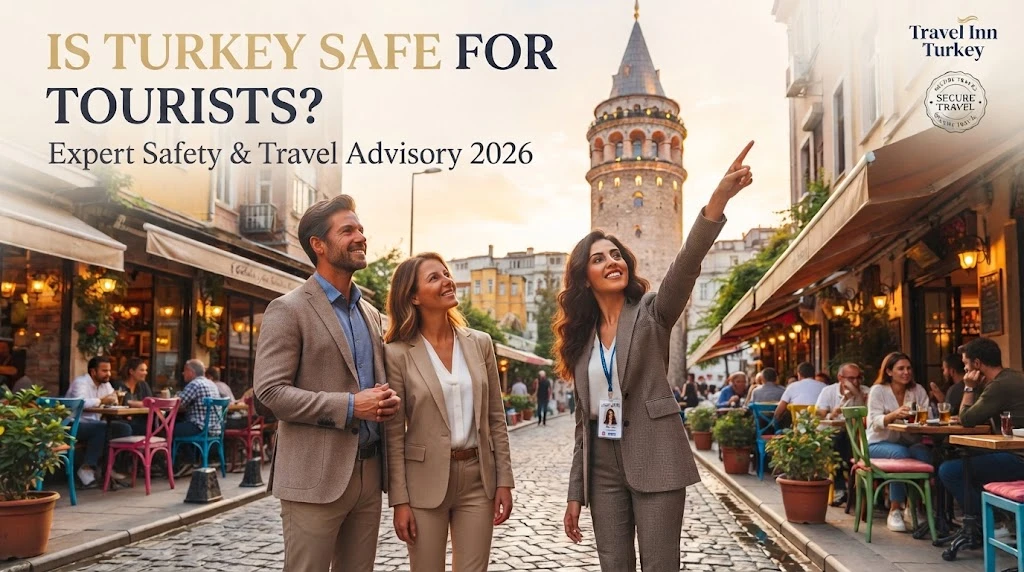
Is Turkey Safe for Tourists? A Practical Travel Guide
Turkey is one of the world's most popular travel destinations, welcoming millions of international visitors every year.
From the historic streets of Istanbul and the landscapes of Cappadocia to the beaches of Antalya, the ruins of Ephesus and the turquoise Aegean and Mediterranean coasts, travelers come to Turkey for its history, food, culture, nature and warm hospitality.
Naturally, before booking a trip, many travelers ask:
Is Turkey safe for tourists?
For most visitors, Turkey is an easy and well-established destination to explore, particularly in the country's main tourist regions. Millions of travelers visit every year, and popular destinations have a mature tourism infrastructure, experienced local professionals and services designed around international visitors.
Turkey welcomed approximately 64 million visitors in 2025, reflecting the enormous scale of international tourism in the country.
Turkey also has a strong tourism-focused public infrastructure. In major tourist destinations, travelers can find tourism information services, established transportation networks, licensed tourism businesses and police services supporting busy visitor areas.
In cities such as Istanbul, the presence of tourism police and other dedicated public services in areas frequented by visitors provides an additional point of assistance for international travelers.
Of course, no destination is completely free of everyday travel concerns. But visitors do not need to approach a holiday in Turkey with unnecessary worry.
A little awareness, sensible planning and the same basic precautions you would use in any major international destination are usually all that is needed.
Is Turkey Safe to Visit?
For travelers planning a holiday, the most useful answer is:
Yes, Turkey is an established international tourism destination, and millions of visitors travel around the country successfully every year.
The important thing to remember is that Turkey is a very large country.
Istanbul, Cappadocia, Antalya, Izmir, Ephesus, Pamukkale and the Aegean and Mediterranean coastlines are very different destinations, each with its own character and local conditions.
This is why travelers should think about their specific itinerary, rather than treating Turkey as if every part of the country were the same.
As with any international trip, it is sensible to check your own government's latest travel advice before departure.
But official travel advice should be read in context. A specific recommendation concerning a particular border region does not automatically describe the experience of a traveler spending a holiday in Istanbul, Cappadocia or Antalya.
Is Istanbul Safe for Tourists?
Istanbul welcomes millions of visitors and has a highly developed tourism infrastructure.
The city offers an enormous range of attractions, hotels, restaurants, public transportation, museums, licensed guides, tour operators and visitor services.
Popular areas such as Sultanahmet, Galata, Karakoy, Taksim, Istiklal Street, the Grand Bazaar and the Bosphorus are accustomed to international travelers.
As in any major city, visitors should still take normal precautions.
For example:
- Keep your phone and wallet secure in crowded areas.
- Take care of your belongings on public transportation.
- Use established taxi or transportation services.
- Be aware of your surroundings during large events or demonstrations.
- Keep your accommodation details easily accessible.
These are not uniquely Turkish concerns.
They are simply sensible habits for traveling in a large and busy international city.
And there is an additional reassurance for visitors: Istanbul has dedicated tourism-related police services and public visitor infrastructure in its major tourist areas.
So you can concentrate on what you actually came to Istanbul for:
the history, the food, the Bosphorus, the architecture and the experience of the city itself.
Is Cappadocia Safe for Tourists?
Cappadocia is one of Turkey's most established tourism destinations.
Hotels, cave accommodations, restaurants, licensed guides, tour operators, airport transfers and other visitor services operate throughout the region.
For most travelers, exploring Cappadocia is straightforward.
The main safety considerations are related less to everyday tourism and more to the activities you choose.
If you go hiking, pay attention to weather and terrain.
If you visit underground cities or valleys, follow local guidance.
If you take a hot-air-balloon flight, choose a reputable operator and follow the instructions of the pilot and crew.
Weather conditions can occasionally affect balloon flights. A responsible operator will always put weather and operational conditions before the timetable.
Is Turkey Safe for Families?
Turkey is a popular choice for families because it offers so many different types of experiences.
Children can enjoy beaches, boat trips, archaeological sites, museums, nature, food experiences and fascinating destinations such as Cappadocia.
Families should simply use the same practical precautions they would use anywhere:
- Keep young children close in busy areas.
- Use reliable transportation.
- Carry water during sightseeing.
- Protect children from strong summer sun.
- Take care around swimming pools, beaches and boats.
- Keep important contact information easily accessible.
For families traveling between several destinations, having hotels, transfers and sightseeing arrangements organized in advance can also make the journey much more comfortable.
This is one reason many international visitors choose to work with a local travel company.
Is Turkey Safe for Solo Travelers?
Turkey is also a popular destination for solo travelers.
Istanbul, Cappadocia, Antalya, Izmir, Pamukkale and other major tourist destinations receive independent travelers throughout the year.
Solo travel naturally requires a little more awareness, but there is no need to approach Turkey with unnecessary concern.
Stay aware of your surroundings, keep your valuables secure and use established transportation and tourism services.
If you are unsure about an excursion, transfer or local activity, choosing a reputable company can make things easier.
And sometimes having a local contact is all you need.
Is Turkey Safe for Female Travelers?
Women from around the world visit Turkey independently, with friends, as couples and as part of organized tours.
As with any destination, female travelers may prefer to take additional precautions when traveling alone, particularly late at night.
Choosing a well-established hotel, using reliable transportation and keeping valuables secure are simple habits that can make a trip more comfortable.
For first-time visitors, a local guide or organized tour can also provide additional convenience and peace of mind.
What About Pickpockets and Tourist Scams?
Like other major international tourist destinations, Turkey can experience occasional petty theft and tourist-related scams.
The good news is that most of these situations are easy to avoid with basic awareness.
Keep your phone and wallet secure in crowded areas, avoid displaying large amounts of cash and be cautious with unsolicited offers.
When using taxis or transfers, choose established services.
And if someone approaches you with an offer that sounds unusually attractive, remember one of the simplest rules of travel:
You are always allowed to say no and keep walking.
Is Public Transportation Safe in Turkey?
Turkey has a well-developed transportation network connecting its major cities and tourist destinations.
Istanbul has buses, ferries, trams, metro lines and other public transportation.
Domestic flights and intercity buses connect Istanbul with Cappadocia, Izmir, Antalya, Denizli, Fethiye and many other destinations.
For most travelers, using public transportation is a normal part of experiencing Turkey.
If you prefer a simpler arrival experience, particularly after a long international flight, a pre-arranged airport transfer can be a convenient alternative.
What Should Tourists Know About Taxis?
Taxis are widely available in Turkish cities.
As anywhere else, it is sensible to use official taxis or established transportation services.
Before getting into a taxi:
- Check that it is an official taxi.
- Make sure the meter is being used where applicable.
- Know your destination.
- Keep your belongings with you.
- Use reputable transportation applications where available.
For international visitors arriving with luggage, families or late-night flights, arranging a private airport transfer in advance can simply make the first part of the trip easier.
Is Turkey Safe at Night?
Popular tourist neighborhoods in Istanbul and other destinations can remain lively well into the evening.
Restaurants, cafés, shops and entertainment venues often stay busy late into the night.
As always, use common sense.
Stay in established areas, look after your belongings and use reliable transportation when returning to your hotel.
Travelers who are alone may also prefer to share their plans with a friend or family member.
The goal is not to avoid enjoying Turkey after dark.
It is simply to enjoy it sensibly.
Are There Areas of Turkey Tourists Should Avoid?
This is where understanding Turkey's geography becomes important.
Turkey is a very large country, and conditions can vary between regions.
Some areas close to international borders have specific travel considerations, and official government advice may recommend avoiding particular locations.
This does not mean travelers should be concerned about Turkey as a whole.
It means that your itinerary matters.
If your journey includes remote or border areas, check the latest official advice before traveling.
For the major tourism routes — Istanbul, Cappadocia, Ephesus, Pamukkale, Antalya and the Aegean and Mediterranean coastlines — travelers should consider the specific local conditions of the destinations they plan to visit.
Natural Risks: Earthquakes, Heat and Wildfires
Turkey's natural environment is another part of travel planning.
Earthquakes can occur because Turkey is located in a seismically active region. If one occurs, travelers should follow instructions from local authorities.
Summer heat can also be strong, particularly in southern and inland areas.
Drink water, use sun protection and take breaks during long sightseeing days.
Wildfires are another seasonal consideration, particularly during the warmer months.
These are practical travel considerations rather than reasons to avoid Turkey.
Checking the weather before an excursion and following local advice is usually the sensible approach.
What Is the Emergency Number in Turkey?
The emergency number in Turkey is:
112
It provides access to emergency services including police, ambulance and fire services.
Save 112 in your phone when you arrive.
It is also a good idea to save your hotel's name, address and telephone number.
Should You Buy Travel Insurance for Turkey?
Travel insurance is a sensible part of any international trip.
Depending on your policy, useful coverage can include:
- Medical emergencies
- Trip cancellation or interruption
- Lost or stolen belongings
- Emergency transportation
- Activities included in your itinerary
If you plan to go hiking, diving, skiing, take a hot-air-balloon flight or participate in another adventure activity, check that your policy covers the activity.
How Can You Make Your Trip to Turkey More Comfortable?
Travel safety does not have to be complicated.
A few simple habits can make a big difference.
1. Stay informed
Check the latest official travel advice before departure.
2. Keep important documents secure
Keep your passport, insurance information and travel documents safe.
3. Look after your belongings
Especially in crowded markets, transportation hubs and popular attractions.
4. Use established services
Choose reputable hotels, licensed guides, established tour operators and reliable transportation.
5. Respect local customs
Turkey is culturally diverse, and visitors should show appropriate respect at religious and historic sites.
6. Plan your transportation
Knowing how you will get from the airport to your hotel — and between destinations — makes a trip considerably easier.
7. Keep a local contact
Having someone you can contact locally can be particularly useful if you have questions during your trip.
Is Turkey Safe for Tourists? The Practical Answer
No destination can promise that every traveler will have a completely problem-free holiday.
But there is also no reason to approach a trip to Turkey with unnecessary fear.
Turkey is an established tourism destination that welcomes millions of international visitors every year. In 2025, the country welcomed approximately 64 million visitors.
Its major tourist destinations have extensive tourism infrastructure, experienced local professionals and services designed for international travelers.
For visitors, the sensible approach is simple:
Stay informed. Use reputable services. Take normal precautions. Follow local advice. And enjoy your trip.
Turkey is a country meant to be experienced.
Walk through Istanbul.
Watch the balloons rise over Cappadocia.
Explore the ruins of Ephesus.
Swim in the Mediterranean.
Taste Turkish food.
Meet local people.
And let the journey become part of the experience.
Travel Turkey with Travel Inn Turkey
At Travel Inn Turkey, we believe that good travel starts with good planning.
As a local travel company, we help international visitors organize private tours, small-group experiences, airport transfers, hotels, and tailor-made Turkey itineraries.
Whether you are visiting Istanbul for the first time, traveling with your family, discovering Cappadocia or combining several destinations in one journey, having a reliable local travel contact can make the experience much easier.
Your journey should be about discovering Turkey — not worrying about how to navigate it.
Explore Turkey with Travel Inn Turkey and let us help you plan your journey.
Our partners