


Istanbul in One Day: How to Seamlessly Explore Europe and Asia
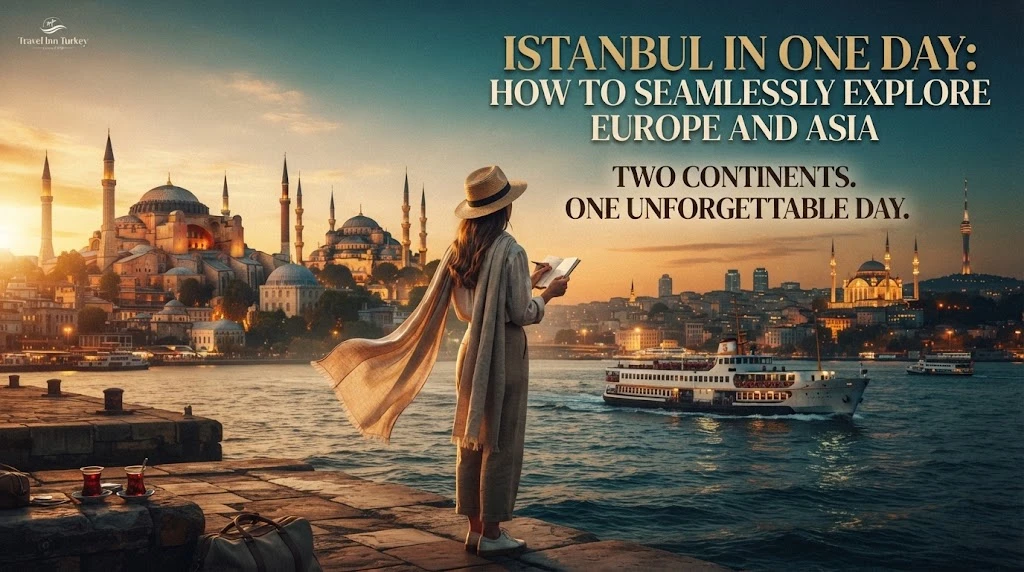
Istanbul in One Day: Exploring Europe and Asia
There are days in Istanbul when I feel that I am not simply visiting a city. I am moving through time. And there are no better days for this feeling than the ones spent on the Bosphorus—where Europe and Asia face each other across the water, boats constantly cross between them, and every wave seems to carry a different story.
That morning, I decided to follow the Bosphorus wherever it wanted to take me.
Crossing from Europe to Asia
I stepped onto the boat with the city slowly waking around me. Istanbul looks different from the water. The domes and minarets of the European side began to move into the distance, while the Asian shore appeared ahead. The wind touched my face, the Bosphorus glittered in the morning light, and for a moment I understood why people can fall in love with this city without even knowing exactly when it happened.
The boat crossed from Europe to Asia, and suddenly I was standing on another continent without ever leaving Istanbul. This is one of the little miracles of the city.
Beylerbeyi Palace: A Glimpse into Ottoman Elegance
My next stop was Beylerbeyi Palace, standing elegantly beside the Bosphorus. From the outside, the palace already feels special. But walking through its rooms is another experience entirely. The decorations, furniture, chandeliers, and delicate details reminded me that this was once a place where Ottoman sultans lived, rested, and welcomed important guests.
I found myself imagining the palace when the Bosphorus was filled with imperial boats and the waterfront was much quieter than the Istanbul we know today. There is something beautiful about standing in a palace beside the water and realizing that the view outside the windows has remained part of Istanbul's story for centuries.
A Tower in the Middle of the Sea
As the boat continued, I looked toward Leandros Tower, better known today as Maiden's Tower. There it was, standing alone in the Bosphorus. I have seen photographs of it many times, but seeing it from a moving boat felt completely different. The tower appeared, disappeared behind another boat, and appeared again. I kept watching.
Sometimes Istanbul is best experienced this way—not by rushing toward the next attraction, but by simply allowing the city to pass in front of your eyes.
Music I Will Remember
Then came one of those unexpected moments that stays with you. Musicians began to play during the boat ride. The music was nostalgic—one of those melodies that somehow makes you feel that you have heard it before, even if you haven't. I felt like I belonged to the scene.
Perhaps this is another secret of Istanbul. Its most memorable moments are sometimes not the famous monuments but the sounds between them.
Haydarpasa Old Railway Station and the Other Istanbul
Standing on the Asian side, I looked toward Haydarpasa, the magnificent old railway station. Its architecture carries the feeling of another era. I imagined trains arriving from distant parts of Anatolia, bringing travelers, families, stories, and dreams into Istanbul.
And then I turned toward the European side. In the distance, I could see Hagia Sophia and Hagia Irene, standing proudly across the water. I was on the Asian continent, looking toward Europe, while boats crossed between us. That moment made me stop. Where else can you stand in one continent and look across the water toward another, while centuries of history are gathered into the same view?
The Little Waves of Istanbul
As the boats reached the shore, small waves gently touched the waterfront. People gathered around. Some stopped to watch the boats. Others fed the street cats. A few threw pieces of bread into the sea, and immediately the birds seemed to know that something was happening.
The cats watched. The gulls waited. The boats coming and going like the waves. And Istanbul continued being Istanbul. These tiny scenes may never appear in a history book, but they are the moments I want to remember.
Following My Way of Seeing Istanbul
By the end of the day, I realized that I had not simply visited two continents. I had experienced two sides of Istanbul. I had crossed the Bosphorus by boat, walked through an Ottoman palace, seen the Maiden's Tower from the water, listened to nostalgic music, admired Haydarpasa, and looked back toward the historic skyline of Europe.
But most importantly, I had experienced Istanbul slowly.
- With the wind on my face.
- With music in the background.
- With small waves touching the shore.
- With cats waiting for their next treat.
- And with boats constantly reminding me that Europe and Asia are only a few minutes apart.
Follow My Way Through Istanbul with Travel Inn Turkey
If you would like to experience Istanbul in the way I did—not simply ticking monuments off a list, but discovering the atmosphere, sounds, tastes, and small moments between them—get in touch with Travel Inn Turkey.
- Cross from Europe to Asia.
- Visit Beylerbeyi Palace.
- See Maiden's Tower from the Bosphorus.
- Discover Haydarpasa from the Asian side.
- Listen to Istanbul's musicians.
- Watch the ferries, gulls, cats, and people create their own daily rhythm.
Come and follow my way of seeing Istanbul.
Because sometimes the best way to discover a city is not to ask, "What should I see?"
It is to ask,
"What will I remember when I leave?"
And I know what I will remember.
The Bosphorus.
The music.
The little waves.
And Istanbul standing beautifully between two continents.
Niobe_
Our partners