


Kâtip Sinan Mosque in Istanbul: History of an Ottoman-Era Landmark
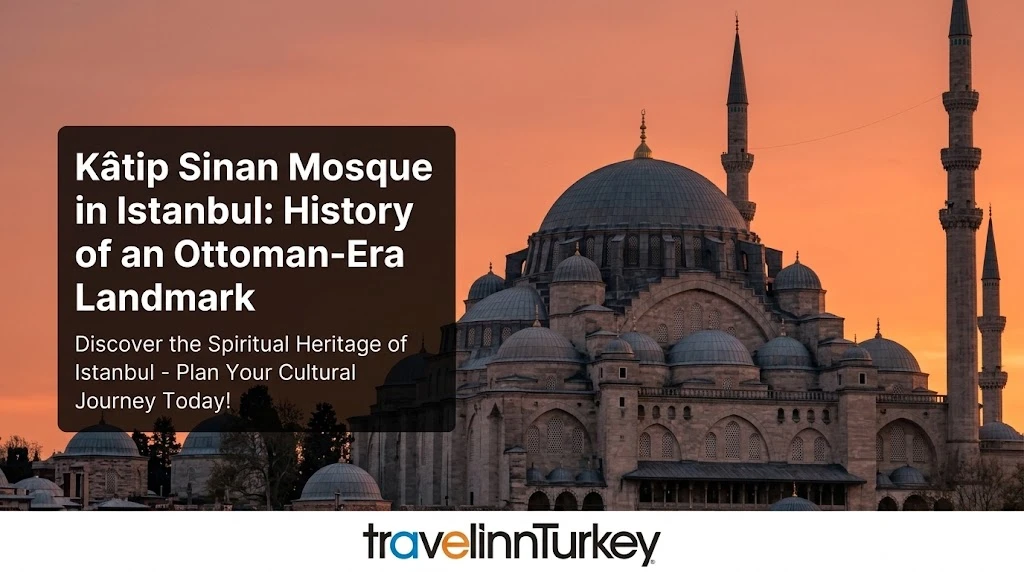
Katip Sinan Mosque in Istanbul
History of an Ottoman-Era Landmark
Istanbul is a city where history often lies hidden beneath its busy streets. Beyond the grand imperial mosques and famous monuments, the historic Fatih district preserves the memory of smaller neighborhood mosques that once played an essential role in everyday Ottoman life. One such monument is Katip Sinan Camii, also known in historical records as Sinan Aga Mescidi. After disappearing from the urban landscape over time, this little-known mosque has become the subject of archaeological investigation and reconstruction, offering a fascinating glimpse into Istanbul’s lesser-known Ottoman heritage.
For travellers interested in discovering the authentic history of Istanbul, Katip Sinan Camii represents more than a religious building. Its story connects archaeology, traditional neighborhood life, Ottoman architecture and the modern effort to preserve the city's cultural memory.
The History of Katip Sinan Camii
Katip Sinan Camii is associated with the Ottoman architectural heritage of the sixteenth century. According to Fatih Municipality, its architectural characteristics suggest that it dates from this period, although the identity of its original founder has not been conclusively established. Historical records also refer to the building as Sinan Aaa Mescidi, a name that helps researchers trace its place in the city's past.
The word katip means clerk or secretary in Turkish and Ottoman usage, while mescit refers to a small Muslim place of prayer. Such buildings were common throughout Ottoman Istanbul, serving the spiritual needs of residents in their immediate neighborhoods. Unlike the great imperial mosques commissioned by sultans and senior statesmen, local mescits were generally modest structures closely connected to the daily rhythms of community life.
Although detailed information about Katip Sinan Camii's original construction date, patron and early history remains limited, its architectural remains provide valuable evidence of this tradition. The mosque's rediscovery demonstrates how even a relatively small religious building can contribute to our understanding of Istanbul's historical development.
Ottoman Neighbourhood Life and Religious Architecture
During the Ottoman period, neighborhood mosques were important centres of community life. Residents gathered for daily prayers, religious occasions and social interaction, making these buildings integral parts of the urban environment. Their presence also helped define the character of individual neighborhoods.
Many small Ottoman mosques were constructed using locally available materials and traditional building techniques. Some combined masonry foundations or lower floors with timber upper structures, reflecting the practical architectural solutions used in residential areas of Istanbul. Archaeological findings at Katip Sinan Camii have revealed a similar arrangement, with masonry elements at basement level and a wooden upper structure.
This construction technique is particularly interesting for historians and architecture enthusiasts because it offers insight into the smaller-scale buildings that once filled the Ottoman capital. While monumental mosques often dominate discussions of Ottoman architecture, neighborhood mescits reveal a more intimate side of the city's architectural and social history.
Archaeological Discoveries: Bringing the Mosque Back into View
One of the most significant developments in the recent history of Katip Sinan Camii took place in 2024, when archaeological excavations were conducted under the supervision of Istanbul's Museum of Turkish and Islamic Arts. These investigations brought portions of the building's original foundations and structural walls back into view.
The discoveries provided important information about the mosque's layout and construction. Researchers identified evidence of masonry in the lower section and timber construction above it, helping specialists understand the building's original architectural character.
Such archaeological work is particularly important in Istanbul, where centuries of construction, demolition, fires, urban development and changing property boundaries have altered the historic cityscape. Beneath modern streets and buildings, traces of earlier neighborhoods can survive, offering opportunities to recover parts of the city's forgotten past.
In the case of Katip Sinan Camii, the excavations provided the evidence needed to develop a reconstruction project intended to bring the lost building back into the urban landscape.
Restoration and Reconstruction: What Is Happening Today?
The restoration and reconstruction of Katip Sinan Camii is an important example of efforts to recover Istanbul's disappearing architectural heritage. In an announcement dated 28 August 2025, Fatih Municipality reported that the mosque's revival project had entered the reconstruction phase following archaeological investigations and the preparation of a project based on historical documentation and excavation findings.
The initiative is being carried out through cooperation between Fatih Municipality and a benefactor. The stated objective is to reconstruct the mosque in a way that respects the evidence uncovered during the excavations and preserves the architectural characteristics of the original building.
It is important to distinguish this project from the restoration of a surviving mosque. Katip Sinan Camii had largely disappeared, so the work involves reconstructing a lost historical structure using archaeological evidence and documentary research rather than simply repairing an intact building.
According to the municipality's published announcement, the intention is to reopen the mosque for worship once the revival project has been completed. However, the announcement does not establish that the reconstruction has since been completed or that the mosque is currently open to visitors. Travellers wishing to see the site should therefore check the latest information from Fatih Municipality before planning a visit.
Why Katip Sinan Camii Matters to Istanbul's Heritage
The story of Katip Sinan Camii illustrates an important principle of heritage conservation: a city's history is preserved not only through its most famous monuments but also through its smaller and less visible buildings.
Istanbul's historic Fatih district contains layers of Byzantine, Ottoman and modern urban history. Its streets preserve the memory of changing communities, religious institutions, commercial activities and architectural traditions. Recovering a lost Ottoman mosque helps restore one small but meaningful part of this larger historical picture.
The reconstruction also raises important questions about how lost monuments should be recreated. Archaeological evidence, historic documents and architectural research are essential to ensure that a reconstructed building reflects what is known about the original rather than an imagined version of the past. In this respect, the excavations at Katip Sinan Camii are as important as the planned rebuilding itself.
For students of history, architecture and archaeology, the project offers an opportunity to understand how modern conservation specialists investigate and interpret historic structures that have not survived above ground.
Visiting Katip Sinan Camii: What Travellers Should Know
Visitors exploring Istanbul's historic Fatih district may find the story of Katip Sinan Camii especially interesting because it reveals a lesser-known dimension of Ottoman heritage. Rather than being a conventional tourist attraction with an established history of public access, it is a site whose significance lies in its rediscovery and ongoing revival.
Before visiting, travellers should verify the precise location, the current state of construction and whether access to the site is permitted. Reconstruction work may affect public access, and the municipality's published announcement does not confirm a current opening date.
If access is available, visitors should approach the site as a heritage project as well as a religious location. Respectful clothing and quiet behavior are appropriate around active places of worship, while any archaeological remains or construction areas should be viewed only from permitted public areas.
For those planning a wider exploration of Ottoman Istanbul, the Fatih district offers many other historic mosques, traditional streets and monuments that help explain the city's development after the Ottoman conquest of Constantinople in 1453.
Discover the Hidden History of Istanbul with Travel Inn Turkey
At Travel Inn Turkey, we believe that discovering Istanbul means looking beyond its famous landmarks to uncover the stories hidden within its historic neighbourhoods. From magnificent imperial mosques to forgotten mescits being rediscovered through archaeological research, every monument adds another chapter to the city's extraordinary history.
Katip Sinan Camii reminds us that cultural heritage is not always immediately visible. Sometimes, it must first be uncovered, studied and carefully brought back to life. Its story offers travellers a fascinating reason to explore the historic streets of Fatih and appreciate the many layers of Istanbul's Ottoman past.
Explore Istanbul with Travel Inn Turkey and discover the history, architecture and hidden cultural treasures that make Turkey an unforgettable destination.
Our partners