


I Got Lost in Istanbul's Grand Bazaar — and Discovered a City Within the City
I Got Lost in Istanbul's Grand Bazaa and Discovered a City Within the City
I thought I knew where I was going.
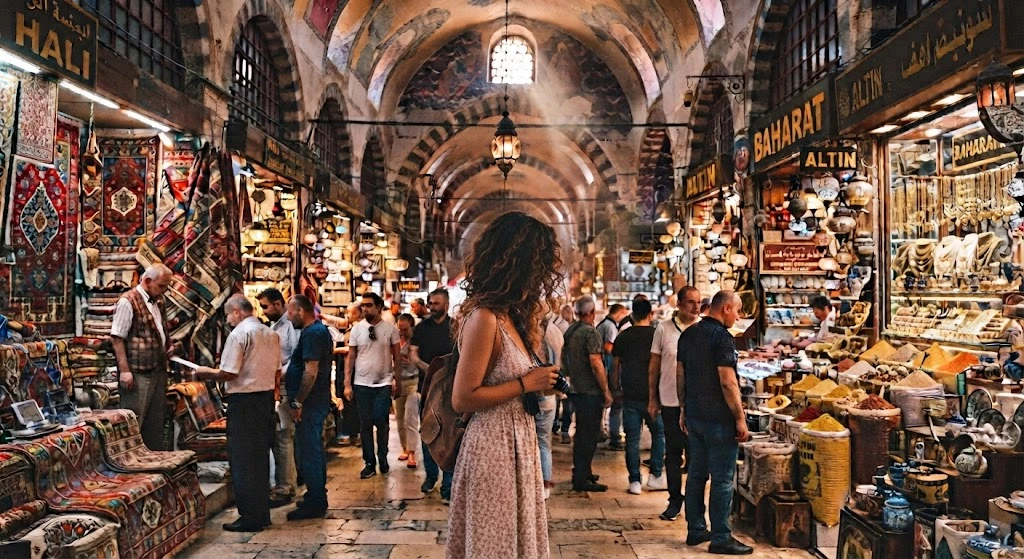
I entered the Grand Bazaar, surrounded by people, colors, lights and the constant movement of shoppers and shopkeepers. I walked through one street, then another. The shops outside looked familiar. The streets seemed almost identical. And, without really noticing it, I lost my sense of direction.
At first, I wasn't worried.
Then I remembered something important.
The Grand Bazaar has many gates and many exits.
And I had paid very little attention to which one I had entered through.
Suddenly, finding my way out became a challenge.
It was getting late, too. The bazaar was approaching closing time, and the atmosphere was changing. Sellers were beginning to close their shops, shutters were coming down and the crowds were slowly disappearing.
That was the moment when I started to panic.
Where is the exit?
I walked a little faster, looking for something familiar. But the streets seemed to repeat themselves. One passage looked like another. One entrance could easily be mistaken for another.
Then came a very helpful tip:
Think of the Grand Bazaar as a city.
And suddenly, everything made sense.
The Grand Bazaar isn't simply a collection of shops under an enormous roof. It was designed as a kind of city within the city, with streets, lanes, sections, numbers and gates.
Just like a real city, you need to know which street you are on and which gate you are heading towards.
There are numerous gates around the bazaar, connecting it with different parts of the surrounding historic district. One entrance is close to the tram line. Another is near the Column of Constantine, the Cemberlitas area, and another route leads towards the Mahmutpasa Bazaar, continuing downhill towards Eminonu.
Suddenly, being lost didn't seem quite so frightening.
It became interesting.
I started paying attention to the details I had completely ignored when I first entered.
The streets had their own character. The shops were not simply random businesses placed together. Different areas had different trades and traditions. And above me were the magnificent old ceilings, with decorations and architectural details that changed from one passage to another.
I had been so focused on finding my way that I hadn't noticed how much there was to see.
And then I realized something else.
Getting lost here is not necessarily a bad thing.
Sometimes getting lost is exactly how you discover something you would otherwise have missed.
The Grand Bazaar has a very unusual atmosphere. You can hear conversations, bargaining, footsteps and shopkeepers welcoming visitors. You can move from a quiet passage into a crowded street within seconds. You can look at jewelry, carpets, leather, ceramics, antiques and countless other treasures.
And somewhere between all those streets and gates, you may suddenly forget that you are a visitor.
For a moment, you become part of the bazaar itself.
That evening, I finally found my way out.
But I left with a different understanding of the Grand Bazaar.
It is not just a place where people come to shop.
It is a historic neighborhood, a maze of streets, a meeting place and a living part of Istanbul's old city.
And next time I enter, I will definitely pay attention to the gate number, the street and the direction.
Although...
I may still allow myself to get a little lost.
Because sometimes, getting lost is the best way to learn something you didn't know before.
What I know now?
This covered city counts 21 gates, dozens of streets, hans, and thousands of shops.
That explains why losing your sense of direction there is so easy.
If you would like to experience the Grand Bazaar beyond simply walking from one shop to another, Travel Inn Turkey can assist you in joining private walking tours or group tours around Istanbul.
Sometimes the best stories begin when you don't quite know where you are going.
Niobe_
Our partners