

Mount Nemrut: Where Gods, Kings, and Colossal Statues Meet Above the Clouds
Mount Nemrut: Where Gods, Kings, and Colossal Statues Meet Above the Clouds
Today I met the Gods Among Turkey's Giant Statues
There are places where you arrive and immediately feel that something happened here. Mount Nemrut was one of those places for me.
I had seen photographs of the enormous stone heads before. But photographs do not prepare you for the feeling of standing high in the mountains of southeastern Turkey, surrounded by enormous ancient statues, looking across the landscape that once belonged to the mysterious Kingdom of Commagene.
So I decided to go. I wanted to meet the gods of Mount Nemrut. And, of course, I had a few questions:
- Who built these enormous statues?
- Why were they placed on this lonely mountain?
- And why did someone think that putting giant stone gods on top of a mountain was a perfectly normal thing to do?
Well… I was about to find out.
A Kingdom Hidden in the Mountains
Mount Nemrut is connected with the ancient Kingdom of Commagene, a small but fascinating kingdom that flourished in this part of Anatolia during the Hellenistic period. Its most famous ruler was King Antiochus I Theos, who ruled in the 1st century BC.
Antiochus created an extraordinary sanctuary on the summit of Mount Nemrut. His enormous monument combined different worlds: Greek and Persian traditions, local Anatolian culture, mythology, and royal power. This is what makes Nemrut so special. It is not simply an archaeological site. It is a meeting place of civilizations.
And Then I Saw the Heads…
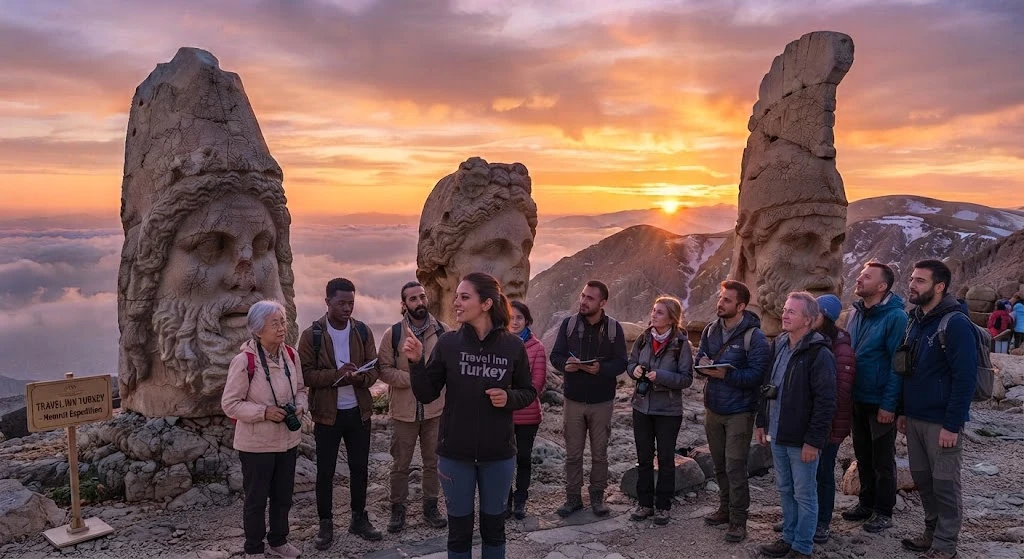
The first thing that caught my attention was not the mountain. It was the heads. Huge stone heads, sitting among the remains of the ancient sanctuary. They belonged to colossal statues that once stood approximately eight to nine meters high:
- Zeus
- Apollo
- Heracles
- King Antiochus himself
- And other divine figures connected with the religious world of Commagene
Imagine walking toward them for the first time. You look up. They look down. Well… technically, they don't have bodies anymore. But somehow they still manage to look rather impressive. I suddenly understood why Mount Nemrut has fascinated travellers, archaeologists, and historians for generations.
The Forgotten Gods of Commagene
What I found particularly fascinating was the mixture of cultures. The monuments of Mount Nemrut show Greek and Persian influences living together. The gods represented here are not simply part of one tradition.
The sanctuary reflects the ambitions of King Antiochus, who wanted to connect his dynasty with both the ancient Persian kings and the gods of the Greek world. It was a very clever idea. And perhaps a little ambitious. Antiochus wanted people to remember him. Nearly 2,000 years later, we are still talking about him. I would say the marketing strategy worked.
Why Is Mount Nemrut So High?
The sanctuary sits at an altitude of around 2,150 metres. That means getting there is part of the adventure. The mountain dominates the surrounding landscape, and the journey itself helps explain why Antiochus chose this extraordinary location.
From the summit, the views stretch across the mountains and valleys of southeastern Anatolia. It feels remote. Quiet. Almost unreal. And then you remember that people came here more than 2,000 years ago to honor their king and their gods. Suddenly the stones feel much more alive.
Sunrise on Mount Nemrut
There is another reason Mount Nemrut has become one of Turkey's most unforgettable experiences: sunrise.
Many travellers visit the summit very early in the morning to watch the sun rise over the ancient statues. The sky slowly changes. The mountains appear from the darkness. And the enormous stone heads become silhouettes against the morning light. It is one of those moments when you don't need to say very much. You simply watch. And perhaps wonder what the people of Commagene saw when they stood here centuries ago.
What Happened to the Statues?
This was one of my first questions. The enormous statues originally formed part of a much larger ceremonial complex. Over time, the statues were damaged and their heads separated from their bodies.
Today, the giant heads rest among the ruins of the eastern and western terraces. And somehow, even in their broken condition, they remain powerful. Maybe that is the strange beauty of archaeology. We don't always need a complete monument to understand its importance. Sometimes the ruins tell an even stronger story.
A Place Where East Meets West
Mount Nemrut is much more than a collection of ancient statues. It tells the story of a kingdom positioned between different cultural worlds:
- Greek ideas
- Persian traditions
- Anatolian heritage
- Roman influence nearby
Different civilizations crossed this region, traded here, fought here, and built their kingdoms here. Standing on Mount Nemrut, I started thinking about how many people must have travelled through these mountains—kings, soldiers, priests, merchants, pilgrims, and now… Niobe. Not quite as impressive as the ancient kings, perhaps, but definitely more likely to get lost.
Would I Recommend Visiting Mount Nemrut?
Absolutely. But I would tell you to come prepared. Mount Nemrut is not a quick stop beside a main road. The mountain is remote, the weather can change quickly, and early-morning visits can be very cold even when it feels warm elsewhere in Turkey.
Wear comfortable shoes and bring warm clothing, particularly if you are going for sunrise. And most importantly, give yourself time. Don't simply arrive, take a photograph, and leave. Walk around. Look at the statues. Look at the landscape. Think about the people who built this extraordinary sanctuary. Let the mountain tell you its story.
Niobe's Final Thought
When I left Mount Nemrut, I kept looking back. The giant stone heads were still there, watching over the mountain. I wondered what they had witnessed: kingdoms rising, kingdoms disappearing, new religions, new languages, new roads, and new people. And yet they remained.
Perhaps that is the real magic of Mount Nemrut. You don't just visit an ancient archaeological site. You stand among the remains of a forgotten kingdom and suddenly become part of its story.
Discover Ancient Anatolia with Travel Inn Turkey
And if you want to discover Mount Nemrut for yourself, why not let us lead the way?
At Travel Inn Turkey, we specialize in crafting unforgettable, seamless journeys across Anatolia's most breathtaking historical treasures. Whether you want to witness the sunrise on Mount Nemrut, explore the fairy chimneys of Cappadocia, or walk through the marble streets of Ephesus, our expert-guided tour packages take care of every detail.
Ready to stand among the gods? Contact Travel Inn Turkey today to book your bespoke expedition or small-group tour package, and let the ancient wonders of Turkey unfold before you!
Our partners