


Narmanli Han on Istiklal Street: The Fascinating History of Istanbul’s Historic Han
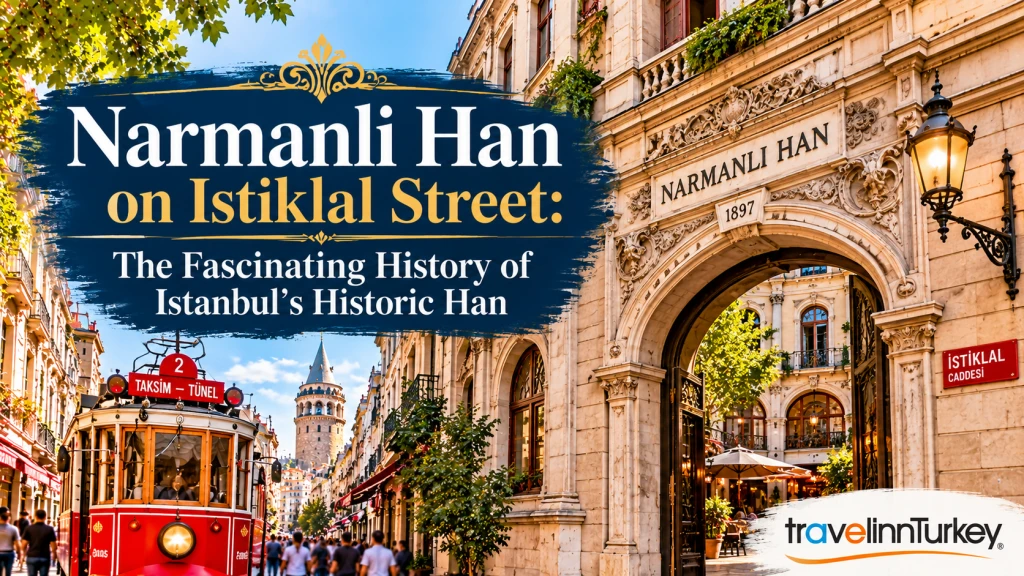
Narmanli Han on Istiklal Street
The Fascinating History of Istanbul's Historic Han
Walking along Istiklal Street in Istanbul, it is easy to concentrate on the crowds, historic buildings, shops, cafes and famous landmarks. But sometimes the most interesting stories are hidden behind an ordinary entrance.
That is how I discovered Narmanli Han, one of the most fascinating historic buildings on Istiklal Street.
At first, I simply noticed the building while exploring Beyoglu. I knew that Istiklal had once been the heart of cosmopolitan Pera, where diplomats, merchants, artists and intellectuals from different countries lived and worked. But when I learned more about Narmanli Han, I realized that this building tells a particularly interesting story about Istanbul's changing identity.
Where Is Narmanli Han?
Narmanli Han is located on Istiklal Street in Beyoglu, one of the most historic areas of Istanbul.
Today, thousands of people walk past it every day. Yet its present appearance does not immediately reveal the many chapters of its past.
For a traveler interested in Istanbul's history, Narmanli Han is worth noticing because it represents several different periods of the city's story: the diplomatic and commercial world of nineteenth-century Pera, the Russian presence in Istanbul, and later the artistic and intellectual life of Beyoglu.
How I First Learned About Narmanli Han
I learned about Narmanli Han while trying to understand the history behind the buildings of Istiklal Street.
One of the things I find fascinating about Istanbul is that a building can have completely different identities at different moments in history. A place that was once connected with diplomats and foreign communities can later become a home for artists, writers and intellectuals.
Narmanli Han was one of those places.
The more I discovered about it, the more curious I became. It was not simply an old commercial building. Its history was connected with the international character of Pera and with some of the people who helped shape Istanbul's modern cultural life.
From Russian Diplomatic Connections to a New Identity
Narmanli Han's early history is particularly interesting because of its connection with the Russian presence in Pera.
During the nineteenth century, Pera was one of the most international districts of Constantinople. Foreign embassies, consulates, businesses, hotels and residences transformed the area into a meeting point between the Ottoman Empire and Europe.
Narmanli Han became associated with the Russian diplomatic community during this period. The building's history is therefore connected to a time when Pera was filled with representatives of foreign powers, merchants and travelers.
This international atmosphere helps explain why the buildings around Istiklal Street are so architecturally and historically diverse.
Narmanli Han and the Artists of Istanbul
What makes Narmanli Han particularly memorable for me is what happened later.
The building became associated with artists, writers and intellectuals. Its courtyards and rooms became part of the cultural landscape of Beyoglu.
Among the names connected with Narmanli Han is the famous Turkish poet Bedri Rahmi Eyuboglu, who had a studio there. The building also became associated with other artists and intellectual figures.
This changed the character of the han.
It was no longer remembered only for its diplomatic and foreign connections. It became part of the story of Istanbul's artistic community.
Why Was Narmanli Han Important to Artists?
There was something about Beyoglu that naturally attracted creative people.
Artists and intellectuals could live, work, meet and exchange ideas within a relatively small area. The streets of Pera offered cafes, theatres, bookstores, galleries, hotels and historic buildings where different communities interacted.
Narmanli Han fitted into this environment.
Its spaces provided an atmosphere where artists could work and meet. For me, this is one of the most interesting things about historic Istanbul: buildings were not isolated monuments. They were living places where people created, argued, worked, socialized and produced culture.
A Different Way to See Istiklal Street
Many visitors experience Istiklal Street as a busy pedestrian avenue.
They see the famous red tram, historic churches, passages, shops, restaurants and monumental buildings. But if you slow down and look carefully, another Istanbul appears.
Behind the facades are stories about Ottoman Pera, foreign communities, diplomacy, commerce, migration, art and literature.
Narmanli Han is a perfect example.
It reminds us that Istiklal Street was not simply a shopping street. It was once one of the most cosmopolitan parts of Istanbul.
What Happened to Narmanli Han?
Like many historic buildings in Beyoglu, Narmanli Han experienced major changes over the decades.
The building survived as Istanbul itself changed dramatically around it. The cosmopolitan world of nineteenth-century Pera gradually disappeared, while Beyoglu developed new commercial, residential and cultural identities.
Narmanli Han also underwent restoration and redevelopment, changing the way visitors encounter the building today.
For travelers interested in heritage, this creates an interesting question: how should historic buildings be preserved while allowing them to remain part of a living city?
Why I Think Travelers Should Notice Narmanli Han
I would not describe Narmanli Han as simply another old building on Istiklal Street.
For me, it represents the layers of Istanbul.
One layer belongs to the Ottoman period and the international world of Pera. Another recalls Russia's diplomatic presence. Another belongs to the artists and intellectuals who later made the building part of Istanbul's cultural history.
Standing in front of Narmanli Han, it is possible to imagine how different generations experienced exactly the same part of the city.
That is what makes Istanbul so fascinating.
Narmanli Han as Part of a Walking Tour of Istiklal Street
If you are exploring Istiklal Street, Narmanli Han can easily become part of a historical walking route.
Instead of simply walking from Taksim Square toward Galata, look at the buildings along the way.
Explore the historic passages. Notice the churches and former embassies. Look for old apartment buildings and commercial hans. Stop to investigate the stories behind buildings that most tourists might simply walk past.
Narmanli Han is especially interesting when combined with other historic places around Beyoglu, because together they reveal how Pera developed as one of Istanbul's most international neighborhoods.
My Final Thought About Narmanli Han
I discovered Narmanli Han because I wanted to understand the history behind Istiklal Street.
What I found was much more interesting than I expected.
The building connects several different worlds: Ottoman Pera, Russian diplomatic history, international communities, and Istanbul's artistic and intellectual life.
Today, people may walk past Narmanli Han without realizing how many stories are connected to its walls.
For me, that is one of the great pleasures of discovering Istanbul.
Sometimes you do not have to visit a famous palace or museum to find an extraordinary piece of history.
Sometimes you only have to stop walking, look up, and ask:
“What happened here?”
And Narmanli Han is a very good place to begin asking that question.
Discover Istanbul Beyond the Famous Landmarks
If you are exploring Istanbul with curiosity, don't only follow the most famous tourist attractions. Walk through Beyoglu, look at the historic buildings of Istiklal Street, explore the old passages and search for the stories hidden behind the facades.
Because Istanbul is not just a city of monuments.
It is a city of layers, memories and stories — and Narmanli Han is one of them.
Niobe_
Our partners